From 2LO to the World: A Century of the BBC
How a crackly voice from a London rooftop in 1922 became the world's most trusted broadcaster — from 2LO to the Empire Service to today.
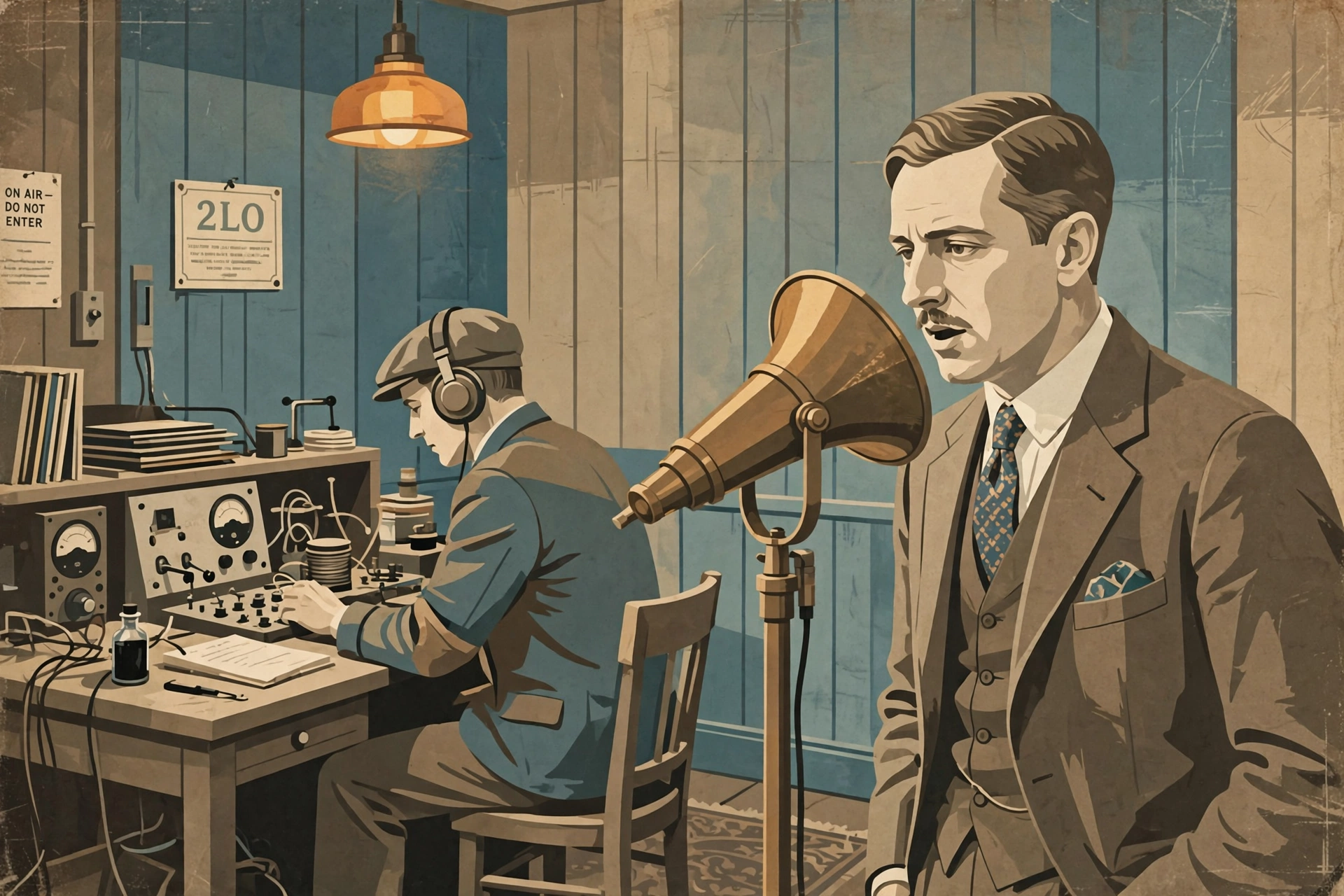
On the evening of 14 November 1922, a voice travelled out of a small room on the seventh floor of Marconi House in London's Strand. The call sign was 2LO. Arthur Burrows, the man reading the first news bulletin, spoke into a microphone that looked like an ordinary telephone receiver — and his grainy, muffled words opened a story that would span more than a century and eventually reach every corner of the planet.
A company built by radio makers
The British Broadcasting Company was formed on 18 October 1922 — not by journalists, but by a consortium of wireless manufacturers including Marconi, Metropolitan-Vickers and the General Electric Company. Britain's General Post Office, worried about an unregulated scramble for the airwaves, had granted a single broadcasting licence to the group.
Daily transmissions began the next month. On 14 November, 2LO went on the air in London; Birmingham (5IT) and Manchester (2ZY) followed the very next day — just in time to broadcast the general election results. By the end of that first year, 35,774 receiving licences had been issued, and the company employed exactly four people.
Reith's mission
In December 1922, a 33-year-old Scottish engineer named John Reith was hired as general manager. Reith gave the young medium its moral compass: broadcasting should "inform, educate and entertain" — and elevate public taste along the way.
In 1927 the company was dissolved and reborn as the British Broadcasting Corporation, a public body established by Royal Charter and funded by the licence fee. The initials stayed the same; the mission did not change.
The voice goes global
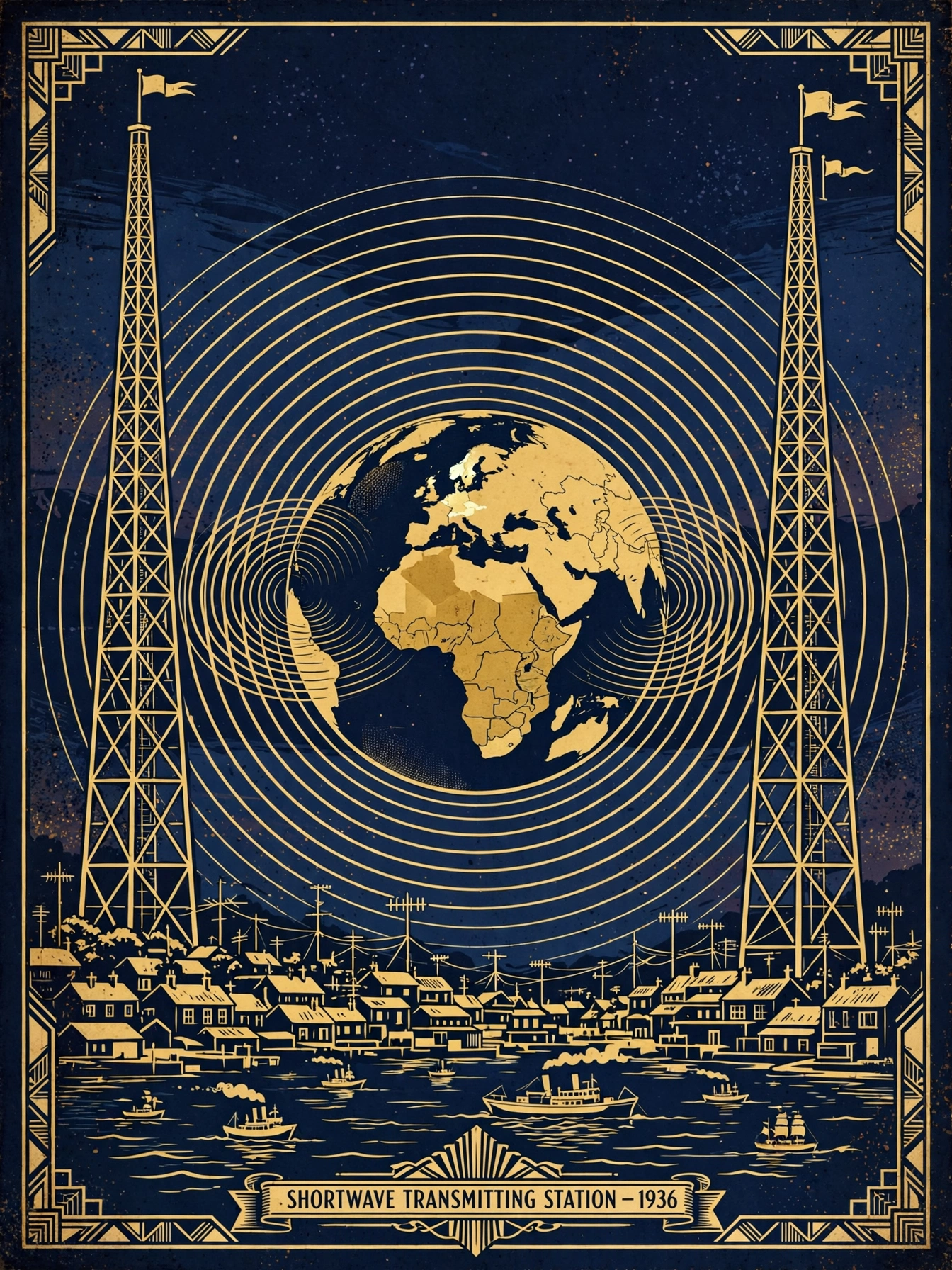
On 19 December 1932, the BBC's Empire Service crackled to life on shortwave from the Daventry transmitting station, aimed at English speakers across the British Empire. Six days later, King George V delivered the first royal Christmas broadcast, speaking of "men and women, so cut off by the snow, the desert, or the sea, that only voices out of the air can reach them."
Reith himself opened the service with remarkable modesty: "Don't expect too much in the early days… The programmes will neither be very interesting nor very good." His address was read out five times, beamed live to different parts of the world.
The first foreign-language service — Arabic — launched on 3 January 1938. German, French and Italian followed that September. By the end of 1942, the BBC was broadcasting in all major European languages.
Trial by war
Twice, crisis proved the BBC's worth. During the 1926 General Strike, when no newspapers were published, the BBC became Britain's only source of news. And during the Second World War, its broadcasts were a lifeline — a trusted voice for occupied Europe, where listeners tuned in secretly. The French service, Radio Londres, even transmitted coded messages to the French Resistance. Novelist George Orwell himself read news bulletins for the Eastern Service.
From the museum to your browser
You can see where it all started in our Radio Museum: the exhibit "1922 — 2LO: a voice from London" traces the step from Marconi's wireless experiments to regular broadcasting.
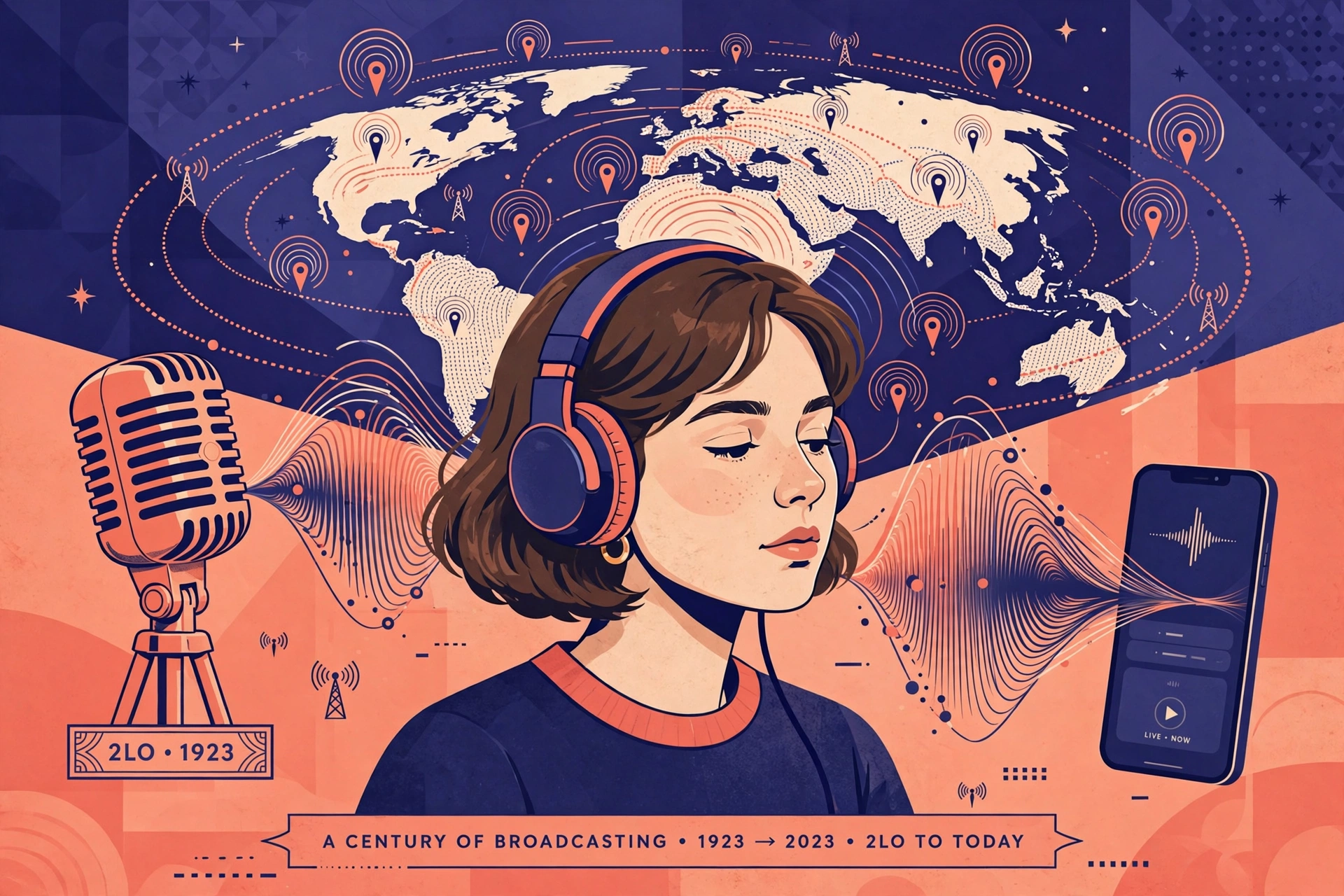
And the story isn't over. The BBC's stations still broadcast around the clock — and you can hear them live, right now, on World Radio Now. A century after Arthur Burrows leaned into that telephone-receiver microphone, the voices are still out of the air. All you have to do is listen.
Sources: BBC history records; Science Museum Group (2LO first broadcast, 14 November 1922); Wikipedia — British Broadcasting Company; Wikipedia — BBC World Service; Radio Heritage Foundation.